
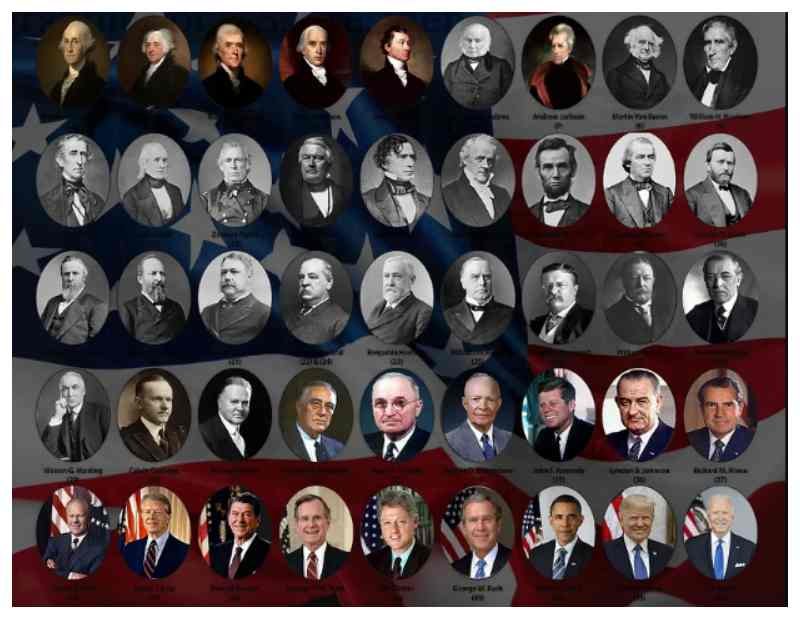
The presidency of the United States represents one of the most consequential political offices in the modern world. Since the nation’s founding in 1789 with George Washington, 46 individuals have held this office, each contributing uniquely to the development, governance, and global influence of the United States. This article provides a detailed, historical, and informative account of US Presidents, their major achievements, contributions to the nation, and lasting impact.
The Founding US Presidents (1789–1825)
George Washington (1789–1797)
George Washington was the first President of the United States in all US Presidents and is universally regarded as the “Father of His Country.” He led the Continental Army to victory in the American Revolutionary War, presided over the Constitutional Convention, and established many benchmarks for the presidency, including the peaceful transfer of power and the two term limit. Washington’s leadership provided stability to the
fledgling republic and helped define the executive role in American governance.
John Adams (1797–1801)
John Adams, America’s second president, in US Presidents played a crucial role in securing independence and shaping early US policy. As president, he strengthened the US Navy, navigated difficult diplomatic tensions with France (the Quasi War), and upheld peace over war. His leadership helped establish the principle that the United States would act independently and assert its rights among global powers.
Thomas Jefferson (1801–1809)
Jefferson, the principal author of the Declaration of Independence, guided the United States into a new era of expansion and democratic idealism. His most notable achievement was the Louisiana Purchase in 1803, which doubled the size of the young nation and opened the continent for westward settlement. Jefferson also championed religious freedom and limited government.
James Madison (1809–1817)
Often called the “Father of the Constitution,” Madison led the nation through the War of 1812 against Great Britain. Although the war had mixed military results, American nationalism and confidence surged after ward. Madison’s presidency reinforced US sovereignty and helped shape early economic policy.
James Monroe (1817–1825)
Monroe’s presidency was marked by the “Era of Good Feelings,” a time of political unity. His Monroe Doctrine declared the Western Hemisphere off limits to further European colonization, a defining moment in US foreign policy. Under Monroe, the US continued expanding westward and consolidating national identity.
Growth, Division, and Civil War (1825–1865)
John Quincy Adams (1825–1829)
A skilled diplomat and son of John Adams, he promoted infrastructure, education, and scientific research despite political opposition that limited his domestic success. His advocacy laid the groundwork for future national improvements.
Andrew Jackson (1829–1837)
Jackson championed the cause of the “common man” and expanded executive power. His presidency saw the controversial Indian Removal Act and opposition to the national bank. He helped shape the modern Democratic Party and emphasized popular participation in politics.
Martin Van Buren (1837–1841)
Van Buren faced economic turmoil following the Panic of 1837 and worked to establish financial stability. His administration underscored the challenges of early US economic policy.
William Henry Harrison (1841)
Harrison’s presidency was tragically short serving from March 4 to April 4, 1841, the shortest presidency in US history. William Henry Harrison died just one month after taking office. Though brief, his election emphasized the importance of political campaigning and public appeal.
John Tyler (1841–1845)
Tyler’s presidency faced intense party conflict, but he secured the Webster Ashburton Treaty, which resolved border disputes with Britain.
James K. Polk (1845–1849)
Polk expanded the nation’s territory significantly through the Mexican American War and accomplished major goals such as settling the Oregon boundary. His presidency marked the fulfillment of Manifest Destiny in the history of US Presidents.
Zachary Taylor (1849–1850)
Taylor, a military hero, struggled with rising sectional tensions over slavery. His short presidency was defined by his unwillingness to compromise on the expansion of slavery.
Millard Fillmore (1850–1853)
Fillmore signed the Compromise of 1850, including the controversial Fugitive Slave Act, in an effort to maintain national unity.
Franklin Pierce (1853–1857)
Pierce’s support for the Kansas Nebraska Act heightened sectional conflict over slavery, contributing to the tensions that led to civil war.
James Buchanan (1857–1861)
Buchanan’s presidency was overwhelmed by sectional crisis. His inability to prevent secession left the nation on the brink of civil war.
Abraham Lincoln (1861–1865)
Lincoln is widely regarded as one of America’s greatest presidents. He led the Union through the Civil War, preserved the nation, and issued the Emancipation Proclamation, which began the end of slavery. Lincoln’s leadership transformed the United States and set the stage for Reconstruction. His leadership was legendary in the history of US Presidents.
Reconstruction and the Gilded Age (1865–1901)
Andrew Johnson (1865–1869)
Johnson took office after Lincoln’s assassination and oversaw early Reconstruction. His lenient policies toward the South and opposition to civil rights measures led to his impeachment by the House, though he was acquitted in the Senate.
Ulysses S. Grant (1869–1877)
Grant focused on Reconstruction civil rights enforcement, and combating the Ku Klux Klan. His administration faced scandals but also protected African American rights in the postwar South.
Rutherford B. Hayes (1877–1881)
Hayes ended Reconstruction and sought civil service reform, aiming to curb corruption and restore public trust.
James A. Garfield (1881)
Garfield promoted civil service reform before his assassination, a tragic event that highlighted the need for government reform.
Chester A. Arthur (1881–1885)
Arthur advanced civil service reform through the Pendleton Act, reducing patronage and professionalizing government roles.
Grover Cleveland (1885–1889; 1893–1897)
Cleveland, the only president to serve two non consecutive terms, advocated fiscal conservatism, fought corruption, and supported gold standard currency policy.
Benjamin Harrison (1889–1893)
Harrison expanded the US Navy, signed the Sherman Antitrust Act, and supported veterans’ pensions.
William McKinley (1897–1901)
McKinley led the nation through the Spanish American War, which resulted in American overseas expansion and the emergence of the United States as a global power.
The Progressive Era and World War I (1901–1921)
Theodore Roosevelt (1901–1909)
Roosevelt’s dynamic leadership embodied the Progressive Era. He championed trust busting, conservation of natural resources, and consumer protection. He expanded national parks and won the Nobel Peace Prize for mediating the Russo Japanese War.
William Howard Taft (1909–1913)
Taft continued antitrust actions and advanced judicial reform, though he struggled with party divisions.
Woodrow Wilson (1913–1921)
Wilson led the nation through World War I, advocated for the League of Nations, and pursued significant domestic reform through his “New Freedom” agenda. Although the US ultimately did not join the League, his vision shaped postwar diplomacy.
The Roaring Twenties to Great Depression (1921–1933)
Warren G. Harding (1921–1923)
Harding promoted a “return to normalcy” after World War I but his term was marred by corruption scandals.
Calvin Coolidge (1923–1929)
Coolidge supported economic growth and limited government intervention, fostering the prosperity of the “Roaring Twenties.”
Herbert Hoover (1929–1933)
Hoover faced the onset of the Great Depression. Though initially committed to voluntarism, his policies were widely seen as insufficient, leading to public demand for stronger federal action.
The New Deal and World War II (1933–1945)
Franklin D. Roosevelt (1933–1945)
FDR served four terms and transformed the American government’s role in society through the New Deal, a series of programs designed to relieve, recover, and reform the economy during the Great Depression. He led the United States through World War II and shaped the postwar global order. Roosevelt’s impact remains foundational in American political and economic history.
Postwar America: Prosperity and Turmoil (1945–1989)
Harry S. Truman (1945–1953)
Truman concluded World War II, oversaw the Marshall Plan to rebuild Europe, and guided US policy through early Cold War tensions.
Dwight D. Eisenhower (1953–1961)
Eisenhower’s presidency was defined by prosperity, containment of communism, and infrastructure development like the Interstate Highway System, which revolutionized US transportation.
John F. Kennedy (1961–1963)
Kennedy managed the Cuban Missile Crisis, strengthened civil rights advocacy, and inspired a generation with his call for public service and the space program.
Lyndon B. Johnson (1963–1969)
Johnson’s Great Society expanded civil rights, public education, and environmental protections. He signed key laws including the Civil Rights Act and Voting Rights Act.
Richard Nixon (1969–1974)
Nixon opened diplomatic relations with China, pursued détente with the Soviet Union, and ended US involvement in Vietnam, though his presidency was overshadowed by Watergate.
Gerald R. Ford (1974–1977)
Ford restored public confidence in the aftermath of Watergate and pursued economic stability.
Jimmy Carter (1977–1981)
Carter championed human rights and negotiated the Camp David Accords. His environmental legacy includes major conservation measures in Alaska.
Ronald Reagan (1981–1989)
Ronald Reagan’s leadership emphasized tax cuts, deregulation, and a robust foreign policy against Soviet influence, contributing to the end of the Cold War.
Modern Era (1989–Present)
George H. W. Bush (1989–1993)
Bush led the successful Gulf War coalition and navigated post Cold War transitions.
Bill Clinton (1993–2001)
Clinton oversaw economic expansion, welfare reform, and balanced the federal budget.
George W. Bush (2001–2009)
Bush responded to the 9/11 attacks, led wars in Afghanistan and Iraq, and established global health initiatives such as PEPFAR to combat HIV/AIDS internationally.
Barack Obama (2009–2017)
Obama’s presidency enacted major reforms including the Affordable Care Act, strengthened the auto industry, and ordered the operation that killed Osama bin Laden.
Donald J. Trump (2017–2021; 2025–Present)
Trump’s first term focused on tax reform, judicial appointments, and trade renegotiation. In his second term, beginning in January 2025, he has aggressively utilized executive authority to pursue border security measures, economic initiatives, and regulatory changes.
Joe Biden (2021–2025)
Joe Biden’s presidency was focused on pandemic recovery, infrastructure investment, climate initiatives, and awarding the Presidential Medal of Freedom to a diverse group of civic leaders and cultural figures shortly before leaving office.
Conclusion
The Presidents of the United States have shaped not only the trajectory of American history but global politics, economics, and human rights. From establishing democratic governance and expanding national territory to navigating world wars, civil rights struggles, economic crises, and contemporary geopolitical challenges, each president’s legacy reflects the evolving priorities and complexities of the American nation.
This historical survey underscores the importance of presidential leadership and the enduring impact of executive decisions on the lives of Americans and the world. Whether through bold diplomacy, internal reform, or crisis management, US Presidents have continuously defined the character of the republic they were elected to serve.
Home Of Inspiring Biographies: OneWorldPlate